
Learning Management System (LMS)
| Sl. No | Semester | View Subject |
|---|---|---|
| 1 | Semester I | Click Here |
| 2 | Semester II | Click Here |
| 3 | Semester III | Click Here |
| 4 | Semester IV | Click Here |
| 5 | Semester V | Click Here |
| 6 | Semester VI | Click Here |
| 7 | Semester VII | Click Here |
| 8 | Semester VIII | Click Here |
About AI & Data Science Department
The Department of Artificial Intelligence and Data Science (AI & DS) was established in 2022 at Mookambigai College of Engineering with a vision of developing competent professionals capable of addressing emerging challenges through Artificial Intelligence, Data Science, and related technologies
The department focuses on providing students with a strong foundation in Artificial Intelligence, Machine Learning, Data Analytics, and emerging technologies through quality teaching, practical learning, innovation, research, and industry-oriented activities.
With an emphasis on Outcome-Based Education (OBE), the department encourages students to develop critical thinking, problem-solving abilities, teamwork, ethical responsibility, and an entrepreneurial mindset.
The department strives to create an environment where students learn to transform data into meaningful insights and develop intelligent, sustainable solutions for real-world problems. Through interdisciplinary learning, research initiatives, industry interaction, and hands-on experiences, students are prepared for successful careers, higher education, entrepreneurship, and lifelong learning.
Vision
Mission
PROGRAM EDUCATIONAL OBJECTIVES (PEOs)
PROGRAM SPECIFIC OUTCOMES (PSOs)
UG CURRICULUM SYLLABUS
R17
Regulation 2017
R21
Regulation 2021
R25
Regulation 2025
Career Opportunities
The field of Artificial Intelligence and Data Science offers diverse and promising career opportunities across a wide range of industries. The Department of Artificial Intelligence and Data Science equips students with the knowledge and skills required to develop intelligent systems, analyse complex data, and create technology-driven solutions for real-world challenges.
Graduates of the programme can pursue careers in:
The programme also provides pathways for students to pursue higher education, research, professional certifications, entrepreneurship and AI-driven startups. With continuous learning and adaptation to emerging technologies, graduates can build successful and meaningful careers while contributing innovative solutions to society.
FACULTY DETAILS (REGULAR APPOINTMENT)

Dr. J. Arul Sindiya B.Tech., M.E., Ph.D.
HOD
DOJ in MCE: 02-07-2025
Experience: 1 Year
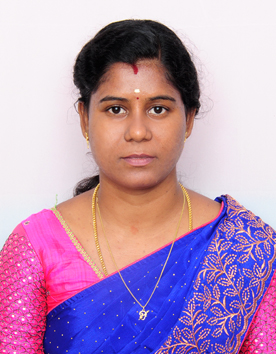
Mrs. B. Divyabharathi
Assistant Professor
DOJ in MCE: 03.02.24
Experience: 2 years 4 months

Mr. K. Anandh
Assistant Professor
DOJ in MCE: 10.01.25
Experience: 1 year 5 months

Mr. Mohamed Yusuff
Assistant Professor
DOJ in MCE: 01.08.25
Experience: 10 months
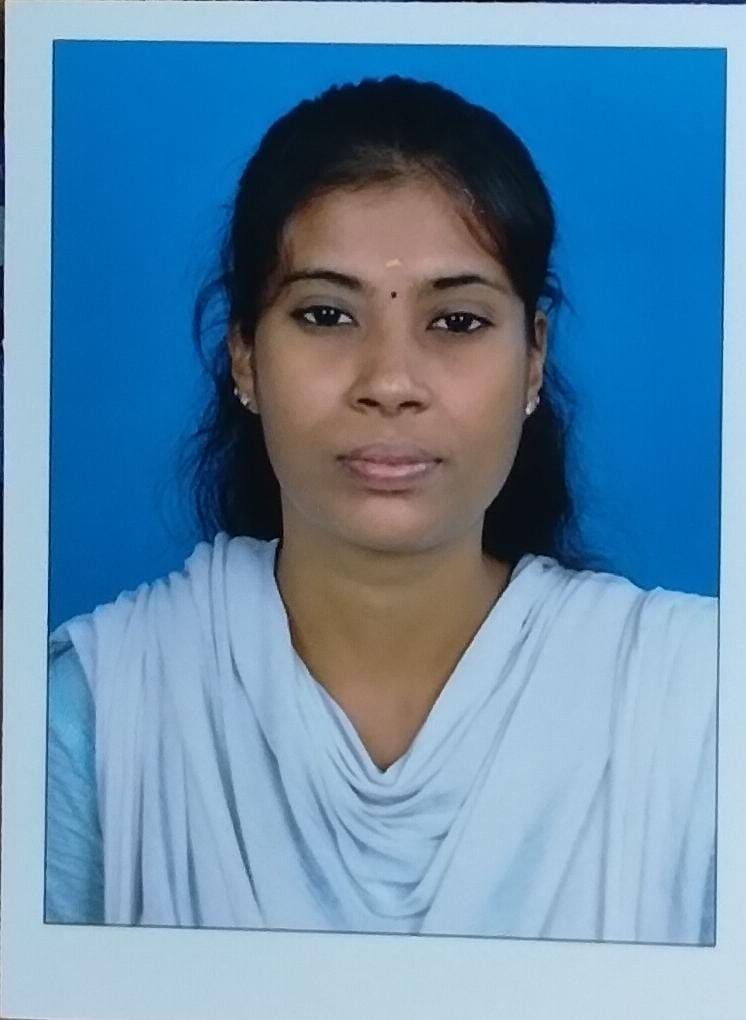
Mrs. B. Shanmuga Priya
Assistant Professor
DOJ in MCE: 25.11.24
Experience: 1 year 7 months
Mrs. S. Kamatchi
Assistant Professor
DOJ in MCE: 01.02.24
Experience: 1 year 4 months

Mrs. S. A. Bhuvana
Assistant Professor
DOJ in MCE: 07.10.24
Experience: 1 year 8 months
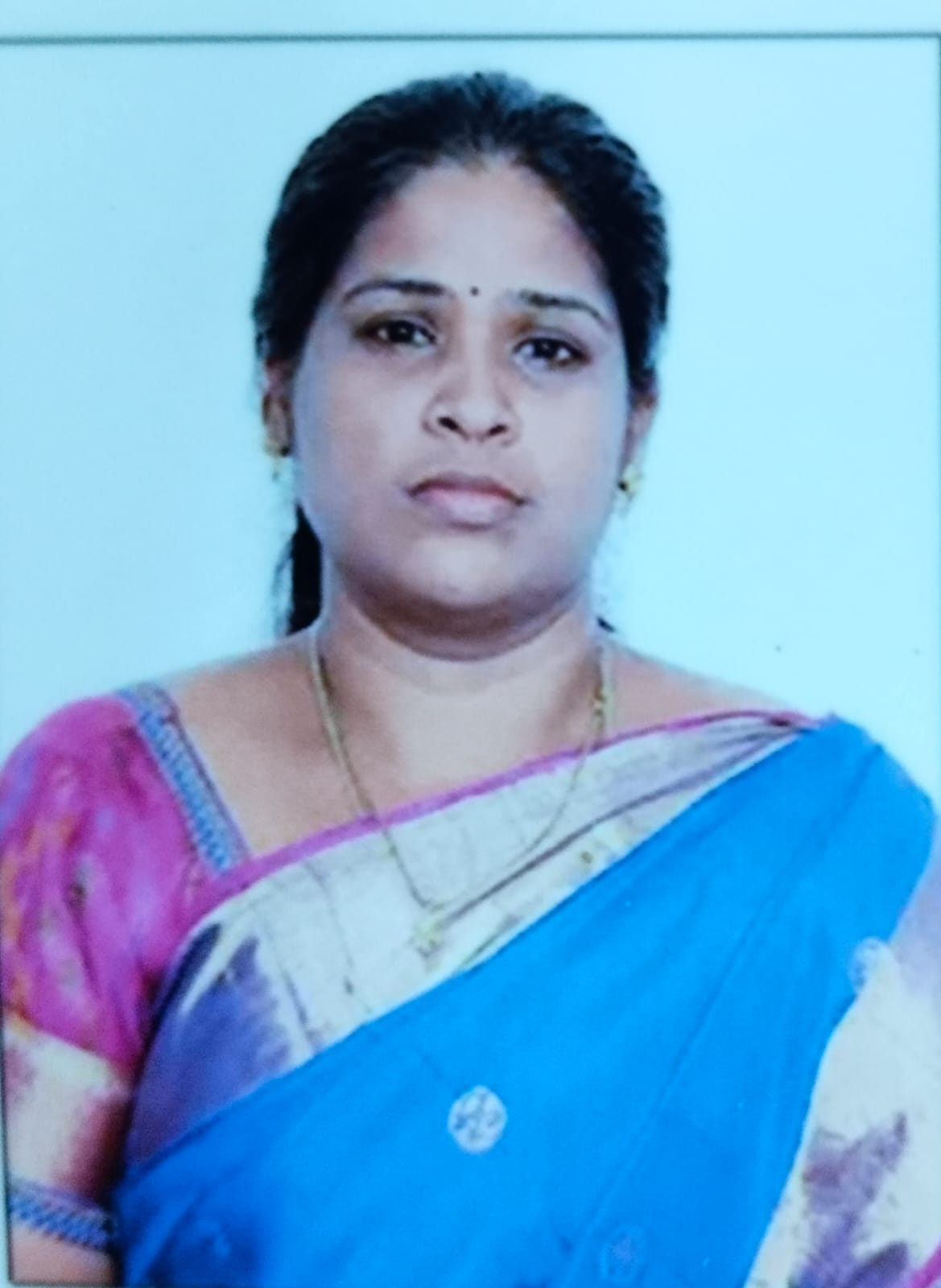
K. Solai Priya
Assistant Professor
DOJ in MCE: 07.01.26
Experience: 6 months
Laboratory
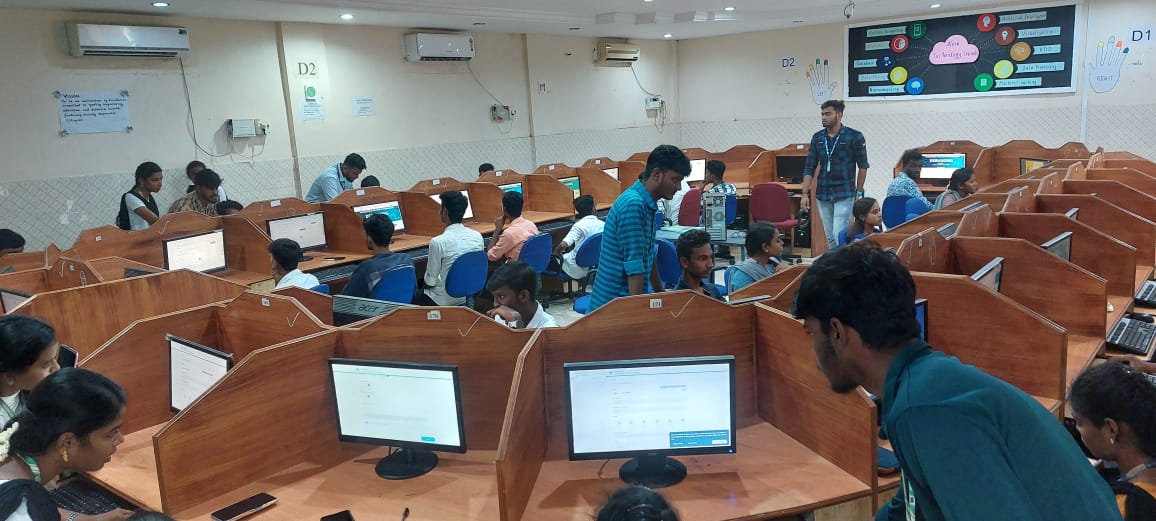
Programming Laboratory
Programming Laboratory is a practical component of a Artificial Intelligence and Data Science curriculum where students get hands-on experience with programming, problem-solving, and software development. It complements theoretical classes by allowing students to apply concepts through actual coding.
The lab is equipped with highly configured systems to learn about the various operations of the Microsoft Office tools and to practice the basic concepts of programming. The System software and Programming language Laboratory will have a cluster of workstations running Operating system of Windows 10/7 for the exclusive use of students.
Various subjects studied in programming lab

This lab serves as a guide for learning and implementing the data structure in a programming language. It basically deals with memory management and various other operations on data with algorithm analysis and design. It helps to implement new algorithm or modify the existing ones according to the requirement. The Lab is well equipped with all advanced softwares for practical applications. The aim of the course is to teach students abstract data types and dynamic data structures. Students use different type of data structures to model real world aggregations of data.

Java is one of the most widely used programming languages. Its features (abstraction, encapsulation, Data hiding etc) and flexibility have made it still the leading choice for most of the areas of application, especially in the software development environment. This lab emphasises on the regular curriculum materials as well as some advanced real life applications implemented as practicals. These practicals, written in the spirit of learning by doing, are designed to give students a working knowledge of the Java programming language.

A database management system (DBMS) is computer application software that provides a way to manage data. The requirement of modern days is to have an automated system that manages, modifies and updates data accurately. This is achieved by a DBMS in robust, correct and non redundant way. DBMS lab aims at practicing and achieving this aim by using various softwares such as SQL, ORACLE, and MS – Access etc. All these require a thorough practice of various DDL, DCL and DML queries.

The purpose of this lab aims at providing students the knowledge about the Internet Programming Tools, and to give the information about the importance of internet technologies, to make them understand the basic HTML tags, to give ability to design web pages, also to give them ability to use the programming language in order to create dynamic web pages, and associating it with the database for publishing the websites and giving the ability to gain knowledge about the Internet skills
Details
- Staff Incharge :
- Mrs.G.Sharmila M.E.,
Assistant Professor - Supporting Staff :
- Ms K.Yamunadevi B.E.,
- No. of System :
- 68
Assistant Professor - System Specifications :
- HP PRO 3330,INTEL I3 Third Generation processor
8GB DDR3 RAM, 256GB SSD,18.5” LCD Monitor[51],
Version,INTEL I5 Second Generation,8GB DDR3 RAM,
512 GB Hard Disk,18.5” LCD Monitor[17]
| DO's | DON'Ts |
|---|---|
| 1. Know the location of the fire extinguisher and the first aid box and how to use them in case of an emergency. | 1. Do not eat or drink in the laboratory. |
| 2. Read and understand how to carry out an activity thoroughly before coming to the laboratory. | 2. Do not eat or drink in the laboratory. |
| 3. Report fires or accidents to your lecturer/laboratory technician immediately. | 3. Do not open the system unit casing or monitor casing particularly when the power is turned on. |
| 4. Report any broken plugs or exposed electrical wires to your lecturer/laboratory technician immediately. | 4. Do not insert metal objects such as clips, pins and needles into the computer casings. They may cause fire. |
| 5. Do not remove anything from the computer laboratory without permission. | |
| 6. Do not touch, connect or disconnect any plug or cable without laboratory technician’s permission. | |
| 7. Do not misbehave in the computer laboratory. |
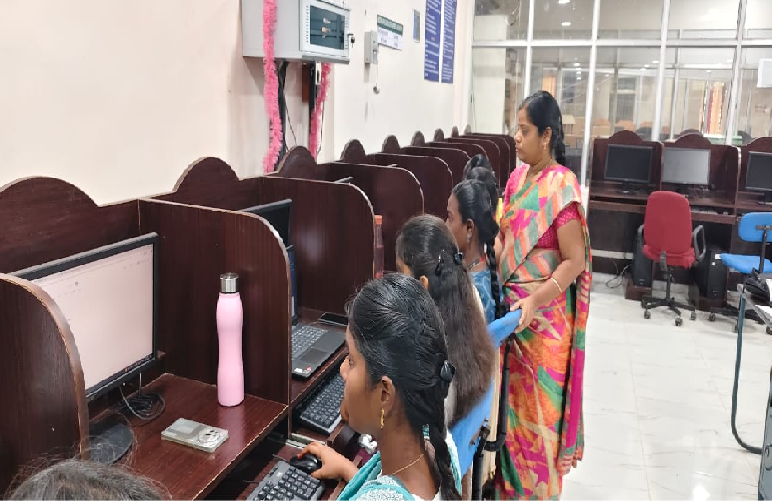
Networks Laboratory
A Networking Laboratory is a practical course where students learn and implement key concepts of computer networks. It is designed to give hands-on experience with network protocols, configurations, simulation tools, and real-world networking equipment.
Students will learn to apply networking principles through the set-up, configuration, and testing of actual network switches, routers, and other networking and computing equipment. Students will complete weekly labs that require them to implement a specific network configuration. Students will get familiar with switching and routing protocols through intensive lab works and projects.
Utilization of Networks Laboratory:
Currently this lab is dedicated to the following courses and works:

Networks Laboratory will guide students in their journey to becoming a functional Network Engineer. This lab will help them for setting up a lab for layer 2 and layer 3 configurations, whether you are connecting 2 computers on the same segment or routing across a network using various routing protocols. The lab will begin by explaining the Packet Tracer, GNS3, EVEng, Design and configure an Ethernet LAN with VLANs, Optimize the use of IPV4 (IPV4 subnetting) , Configure various routing protocols , Deploy ACL based Firewalls , Understand IPV6 and its subnetting , Design an SDN network and CML2. Then we will continue the journey with the basics of creating a simple network and take it all the way to using routing protocols and other tools that will be at your disposal to make an efficient, redundant network that adheres to the newer standards.

The goal of this Operating systems Laboratory is to have students understand and appreciate the principles in the design and implementation of operating systems software. The lab explains the introduction to operating systems concepts, process management, memory management, file systems, virtualization, and distributed operating systems. The laboratory exercises will include familiarization with UNIX system calls for process management and inter-process communication; Experiments on process scheduling and other operating system tasks through simulation/implementation. Finally, the students would require to apply the operating system concepts by experimenting on either xv6/minix operating systems.

With the rapid development of internet information technology, information and resource exchange through network becomes the most frequent and important way for communication. It provides a comprehensive safety system by evaluating network security, making solution for network security, designing network security system structure, deploying security application technology and constructing full-scale security system, which provide a real network environment so that students can learn theory through practice. Network security lab is used for doing network security experiments mostly and its overall design must meet requirements of various network experiments.

This laboratory highlights on areas of cloud computing concepts, basics and practices. Also students get exposed to tool kits for grid and cloud environment and be familiar with developing web services/Applications in grid framework. Students learn to run virtual machines of different configuration and usage of Hadoop.
Details
- Staff Incharge :
- Mr.T.Jahir Hussain M.E.,
Assistant Professor - Supporting Staff :
- Mrs.L.Lakshmi D.C.E.,
- No.of Systems:
- 50
- System Specifications:
- Intel Core2 DUO, 4GB RAM, 320GB HDD,Acer
Power Series,18.5” LCD Monitor - Software Specification:
- Ubuntu, Linux,JAVA, NS2, Packet Tracer, Snort
SAFETY MEASURES
- General Rules of Conduct in Laboratories are displayed
- Specific Safety Rules for students are displayed.
- Fire Extinguisher and First aid kit are regularly inspected and restocked as necessary
- All electrical wires are protected by using MCB
- Periodical servicing of the lab equipments
- Maintaining a clean and organized laboratory
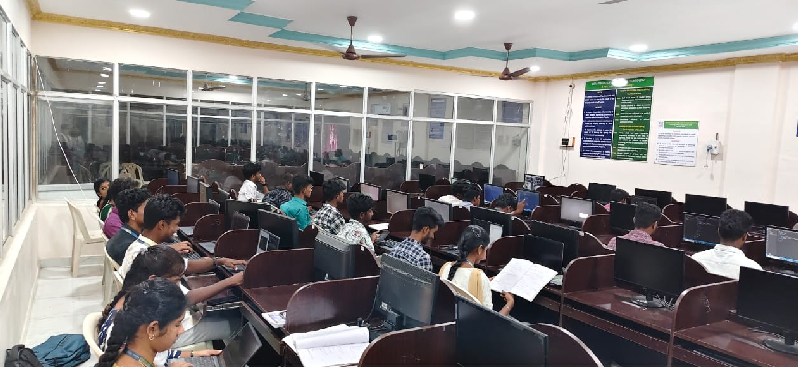
Design Laboratory
The Design Laboratory is a practical course that focuses on the design, development, and implementation of software or digital systems. It varies depending on the semester and subject but is generally aimed at helping students in applying system design principles using ArgoUML, Logisimtools etc., depending on the course structure.

The main purpose of OOAD Lab is to divide a large project in to small modules and representing them using various diagrams. The diagram can be generated by using UML (Unified Modeling Language). It includes various diagrams like Use-case diagram, Activity etc. UML is a visual language for specifying, constructing and documenting the artifact of a system. The applications such as ATM system, E-Book system, Library Management System have been represented using UML diagrams. For diagrammatic representation, rational rose enterprise edition software is used. For implementation, Visual Basic is used.

From this lab students know the components and structure of mobile application development frameworks for Android OS based mobiles. Also understand how to work with various mobile application development frameworks. They learn to design and implement various mobile applications using emulators.

The Data Science Lab focuses on applying machine learning, data mining, and network analysis to real-world problems in society and industry. The Data Science Lab leverages and amplifies breakthroughs in data science and artificial intelligence (AI) to tackle major societal problems. The Data Science Lab focuses on applying scientific methods and algorithms to extract knowledge and insights from structured and unstructured data and to apply to a broad range of application domains. Some of the key thrust areas include the development of natural language processing-based applications, AI-based expert systems.
Details
- Staff Incharge :
- Mrs.Y.Suganya M.E.,
Assistant Professor - Supporting Staff :
- Mr. Jeya Prakash M.C.A.,
- No.of Systems:
- 48
- System Specifications:
- Acer Version, INTEL I5 Second Generation,8GB
DDR3 RAM, 512GB Hard Disk,18.5” LCD Monitor
Power Series,18.5” LCD Monitor - Software Specification:
- JAVA, Android Studio,Rational Rose,
Argo UML,Python, Anaconda
SAFETY MEASURES
- Data Encryption: Encrypt sensitive data at rest and in transit.
- Access Control: Limit access to data and resources to authorized personnel.
- Secure Network: Use firewalls and intrusion detection systems to secure the network.
- Data Anonymization: Anonymize or pseudonymize personal data to protect privacy.
- Regular Backups: Back up data regularly to prevent loss.
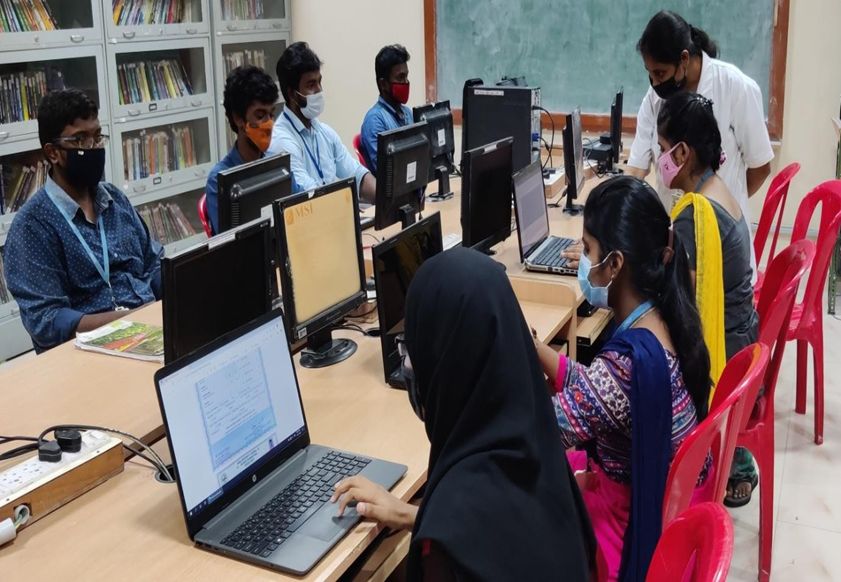
Project Laboratory
In addition to laboratories with academic objectives, our department also provides support for advanced project areas in laboratories. These types of laboratories enhance the education of our students by giving them the experience of working in specific areas of research. In addition to the engineering experience gained on these projects, students also benefit in their achievement of academic goals.
Students and Faculty members are insisting to do their project work and research work in project laboratory. They presented their work in seminar, symposium and conferences.
Details
- Staff Incharge :
- Mrs.D.Ramya Cauvery M.E.,
Assistant Professor - Supporting Staff :
- Ms.K.Uma Maheswari B.E.,
- No. of Systems
- 30
- System Specifications
- Intel i5 11TH GEN,16GB DDR4 RAM,512GB SSD,
18.5” LCD monitor HP PRO 3330, 18.5” LCD
monitor [51], Acer veriton,Intel I5 Second
Generation, 8GB DDR3 RAM, 512 GB Hard Disk,
18.5” LCD Monitor [17]
SAFETY MEASURES
- Safety Training: Ensure all personnel are trained in safety protocols.
- Personal Protective Equipment (PPE): Provide and enforce the use of appropriate PPE.
- Equipment Maintenance: Regularly inspect and maintain lab equipment.
- Chemical Handling and Storage: Follow proper procedures for handling and storage.
- Emergency Preparedness: Develop and communicate emergency procedures.

Seminar Hall
Seminar hall are well-equipped with advanced sound systems and projector facilities that support proper training and lectures. Seminar halls are totally air-conditioned and hold a seminar hall capacity of more than 100 individuals. It also holds instruments that of the smart classrooms, such as the –
Our seminar hall facilities can be accessed by both our students and faculties to cater to several uses such as –
Department Library

Department is dedicated to offering professional courses along with quality training that would help each of our students ensure a secured and successful career for themselves with advanced technology and student-centric facilities. We also provide our students with a well-equipped central library that serves as a world of knowledge.
Our departmental library holds books and journals that cater not only to the syllabus but also nurture the inclination toward research among our students. The library has a seating capacity of 20 readers.
No of Text Books : 402
No of Reference Books : 862
